-
admin
- No Comments
How is Real Music Defined in the Age of AI?

When one of the world’s biggest DJs and electronic music producers, John Summit, released his latest album, CTRL ESCAPE, he posted on social media that, “No AI was used on my album and I’m really proud about that fact. I wish there was a way to label that on Spotify/Apple – like an organic label on food.” The irony is not lost that he is an “electronic music” artist who does not play instruments or sing. As professed to his 1.1 million Instagram followers, he considers his music organic because he didn’t use AI to create it. He added, “I truly fear human made music is gonna be a lost artform in the near future.”
With the proliferation of AI, and electronic music being considered “organic,” what do we call a band like The Strokes or Geese – ones that play live instruments and sing? Ancient? This mindset suggests a massive cultural shift in how we view “organic” music and how it is made. In other words, what’s real and what’s not.
John Summit is not alone. Across pop and electronic music, artists like Billie Eilish, Bad Bunny, and Justin Bieber are leaning further into the human aspects of the music making process. These mega artists are not rejecting technology, they are simply drawing a line in the sand around where it actually helps, not hinders, their attempt to build a legacy through their music.
This insistence on “no AI” also extends across borders. When Spanish pop sensation Rosalía released her latest album, LUX, she made it clear that no AI was used. She claimed to only rely on real voices, real instruments and real orchestras. She described it as a “human album,” built as an act of defiance based on raw performance rather than machine-made sounds.
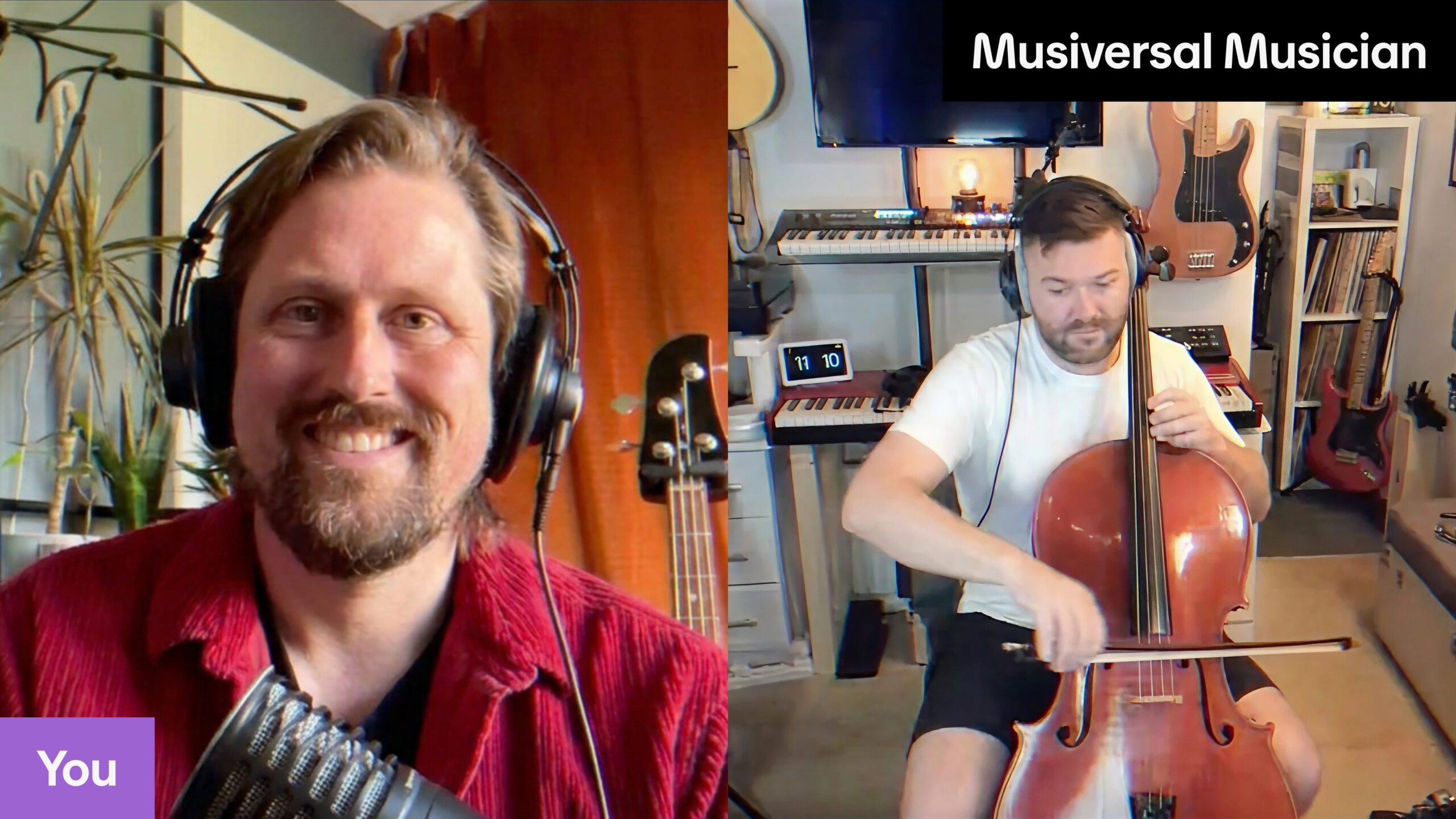
So in a world where creation is infinite with AI and digital tools, how can solo artists tap into more humanity and real instrumentation in song production without incurring massive costs? There is actually a new platform called Musiversal that helps solve this issue. Yes, it’s digital, but it’s not AI because it connects artists with real musicians to collaborate in real time.

Musiversal is the brainchild of Lisbon, Portugal-based inventors André Miranda and Xavier Jameson. Their membership platform connects music creators with a roster of more than 100 auditioned, world-class session musicians who specialize in guitar, bass, drums, piano, strings, brass, woodwinds, and vocals, while also offering more than 130 services across songwriting, production, mixing and mastering, and even marketing. They collaborate in real time over video and are available to members who can book as many sessions as needed for the premium monthly fee of $249. The desired endgame is to produce studio-quality recordings that they own at a reasonable fee with real humans.
More from Spin:
- Rocketship Prepares Your Music for Liftoff
- Riding the Rails of Rock: How The R Train Wants to Bring Classic Rock Into a New Chapter
- Now Hear This: May 2026

This takes collaboration beyond a file drop, a process commonly used by DJs like John Summit for vocal collaborations as heard in his #1 dance track, “Where You Are,” with London-based singer Hayla (Fun fact: according to John’s YouTube channel, she did the song’s vocals in one take!). Sessions on Musiversal aren’t file drops. They’re live and collaborative. A songwriter in London can direct a DJ in Miami or a trumpeter in São Paulo. It’s as simple as that. It allows solo creators to follow their creative instincts in real time and actualize their grandest vision of a song without unruly costs or laptop produced parts.
Musiversal has already been put into play in three major scenarios on the global stage – a Game Awards sweep, a Hollywood soundtrack, and an EP for one of the most iconic voices in music history. Last December, Clair Obscur: Expedition 33 swept The Game Awards with nine wins, including “Best Score and Music,” becoming the most decorated game in the show’s history. Its 154-song soundtrack, composed by Lorien Testard, spent six weeks at #1 on Billboard’s Classical Album Chart. What most people do not know is that it was recorded by dozens of Musiversal session musicians across more than 100 live remote sessions. Traditionally, a score of that magnitude requires orchestras, booking agents, and studio infrastructure most independent composers cannot afford.

Another Musiversal member, Kooldrink, produced the hit song, “Don’t Let Me Drown,” from the F1 film soundtrack (F1 The Album). The song featured Grammy-winning artist Burna Boy with Musiversal pianist Josué González on keys. Grammy-nominated Nashville producer Matt Bronleewe (whose credits include Paramore’s Hayley Williams, The Civil Wars, and The Jonas Brothers) leveraged Musiversal to produce Gloria Gaynor’s EP Happy Tears. He was able to access bass from Brazil, keyboards from Ukraine, drums from Costa Rica, trumpet from the United States, and guitars from South Korea in a global session assembled through the Musiversal platform, while working from his Nashville studio.
On the flip side, Musiversal claims to have paid out more than $5 million in stable monthly incomes directly to the musicians on its platform. Every player on the roster has been auditioned. Many are conservatory-trained, touring professionals or session veterans who have logged thousands of playing hours in their careers. They record from professional studios in London, Los Angeles, Nashville, Rio de Janeiro, Cape Town, and beyond. For members, it means working with someone who can sight-read, improvise, and interpret live, face-to-face and in real time.

No one set out to lose the collaborative side of making music. It simply faded as electronic means advanced. Now, ironically, it’s technology bringing back the human elements in tools like Musiversal, which is simply one alternative to help bring humanity back to music in an age of AI.
To see our running list of the top 100 greatest rock stars of all time, click here.
When one of the world’s biggest DJs and electronic music producers, John Summit, released his latest album, CTRL ESCAPE, he posted on social media that, “No AI was used on my album and I’m really proud about that fact. I wish there was a way to label that on Spotify/Apple – like an organic label […]Kim Jean Taylor{authorlink}https://www.spinmagazine.com/feed/SPINMusic News, Album Reviews, Concert Photos, Videos and Morehttps://static.spinmagazine.com/files/2023/08/cropped-logo-spin-s-340×340.png